Office Window Privacy Film for Meeting Rooms and Glass Doors
Office privacy film protects meetings and screen content without closing down the space. The best result depends on sightlines, seated eye level and how the glass is used.
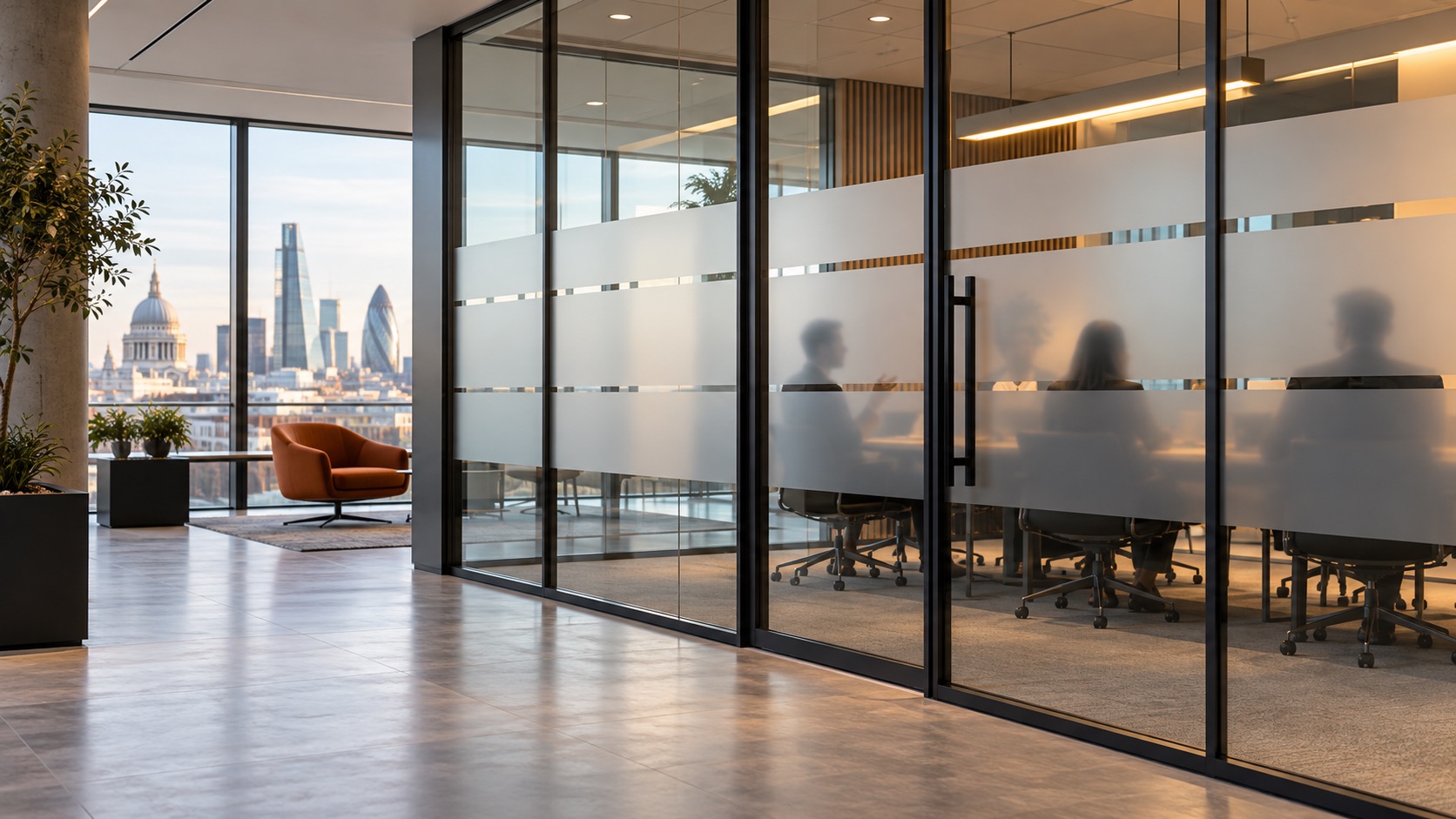
Office window privacy film makes glazed meeting rooms, internal doors and partitions usable without replacing the glass. Frosted film softens direct views while preserving borrowed light, and it can incorporate a logo, pattern or safety manifestation.
The specification should be based on real sightlines. A band that looks right on a drawing may still expose a seated laptop screen. We survey the finished space, check doors and furniture, then set coverage around how people use the room.
We look forward to hearing from you
Good office frosting protects the conversation without making the room feel closed.
The commercial decision
The specification should be based on real sightlines. A band that looks right on a drawing may still expose a seated laptop screen. We survey the finished space, check doors and furniture, then set coverage around how people use the room.
Plan coverage around people and glass
Full frosting gives the greatest privacy but removes views. A broad central band often suits meeting rooms because it screens seated users while leaving high and low clear areas. Large clear panes may also need manifestation, so the privacy design can perform two jobs when position and contrast are properly checked.
Choose the right route
Meeting rooms
Set the band or full panel around seated sightlines and screen positions.
Glass doors
Coordinate privacy with handles, access controls and safe circulation.
Glazed partitions
Repeat a controlled pattern across bays for a coherent interior.
Brand integration
Cut logos and bespoke patterns can support the identity without overwhelming the glass.
Plan the right privacy treatment
Tell us what people should and should not see, when the space is used and whether a clear view must be retained. We will recommend a commercial specification.
Get an EstimateCommon questions
It should respond to seated and standing sightlines, furniture and doors.
Yes, subject to artwork quality, scale and legibility.
Translucent film passes light; it removes a clear view rather than acting like a wall.
Often yes when the design, position and contrast make the glass apparent.